 (1).png)
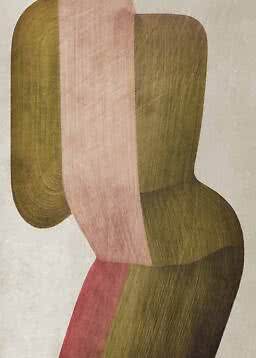
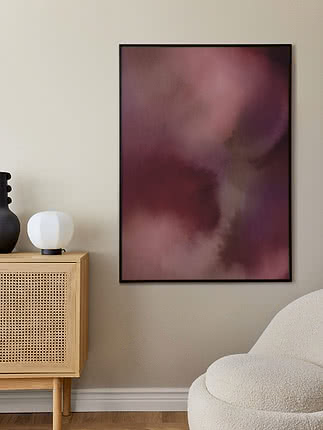
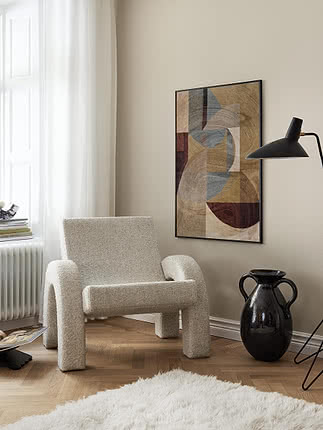
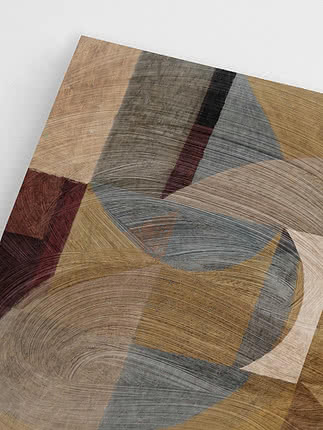
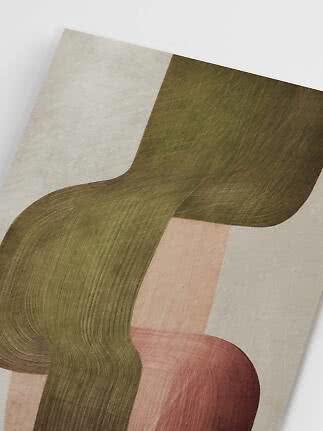
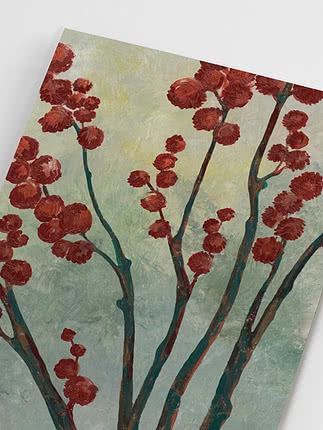
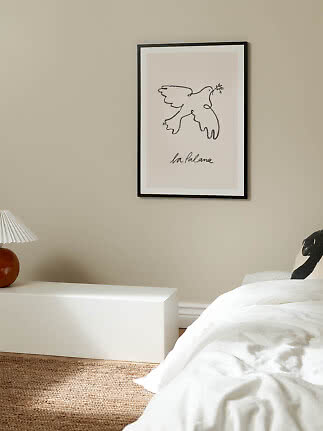
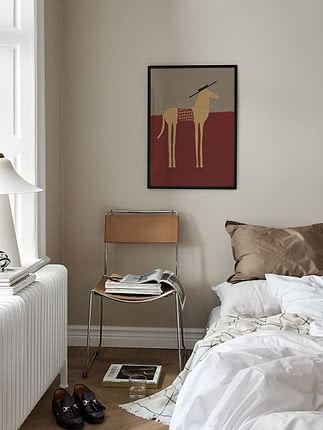
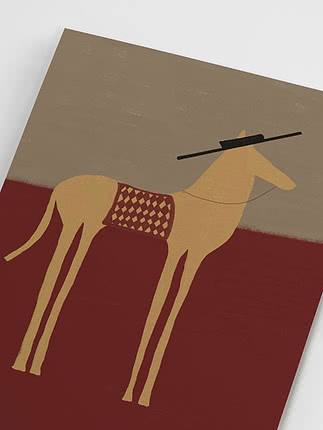
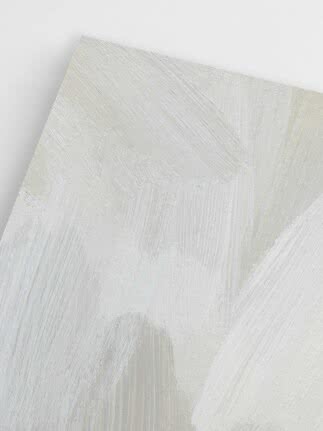
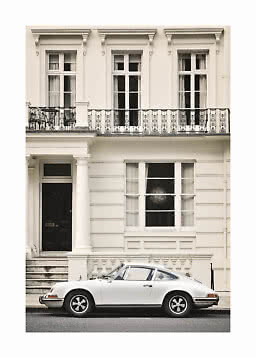
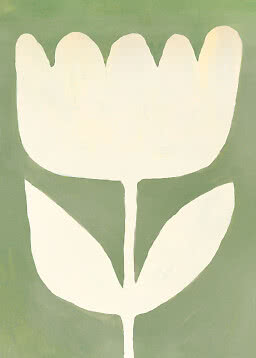
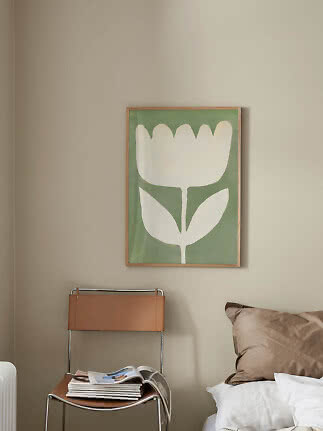
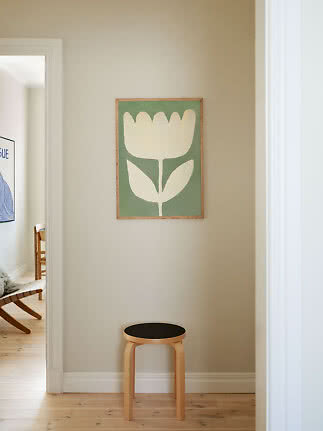
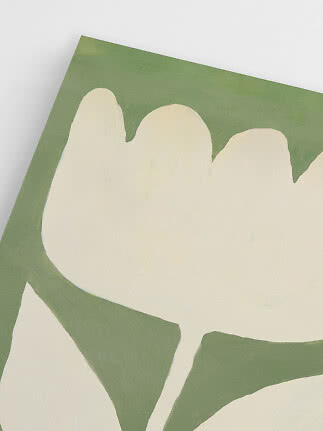
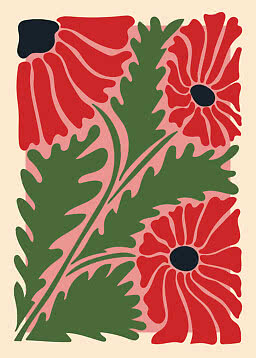
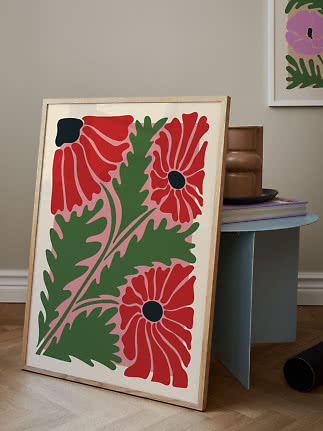
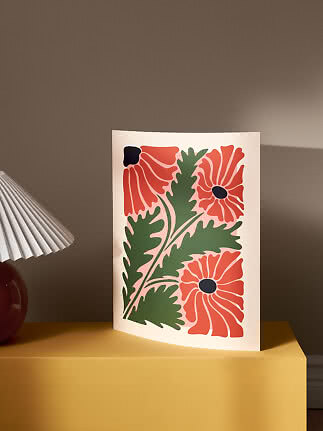
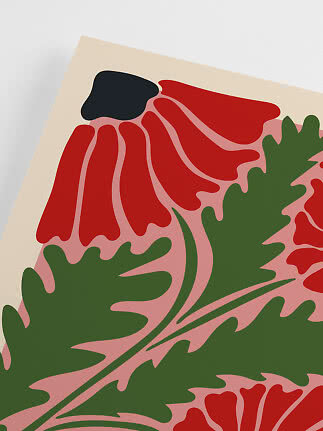
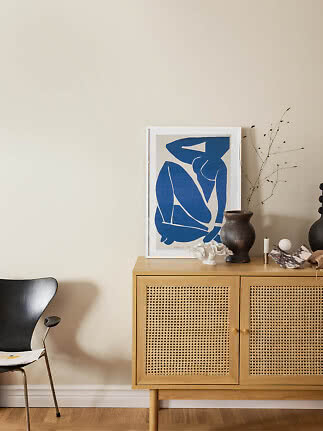
Muted Organic Flow I
Alma
$24.99$36.99
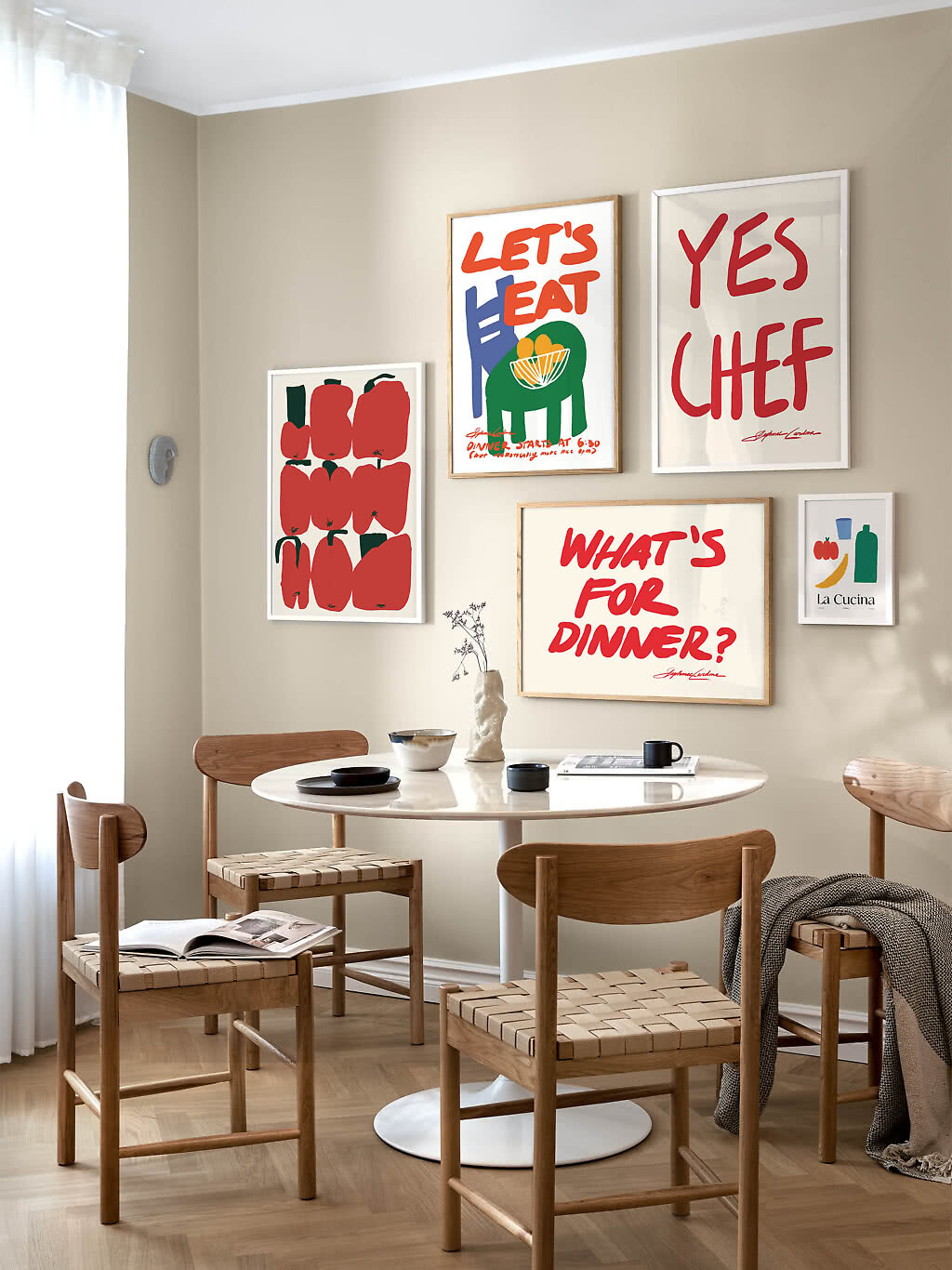
A gallery wall is the quickest way to make a room feel like yours – and the easiest thing to overthink. The good news is that almost every wall that works is built on one of a handful of layouts. Here are five of them, drawn to scale with the exact sizes, together with real walls you can copy straight off.
In short
Most gallery walls go wrong in the same way: you buy the posters you love first and try to make them fit afterwards. Turn it around. Choose a layout that suits the wall and the furniture below it, treat the whole group as one large piece, and then fill the frames.
Here are five layouts that always work, each drawn to scale with the sizes you need and shown on a real wall you can shop frame by frame. For hanging heights room by room, see our guide to hanging wall art.
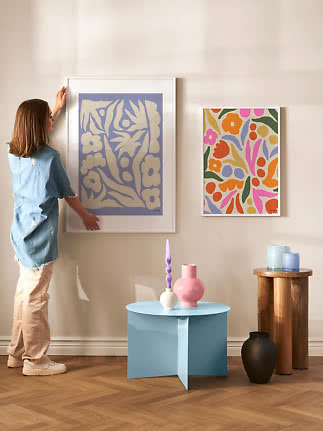
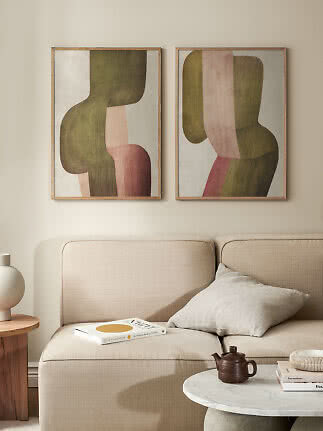
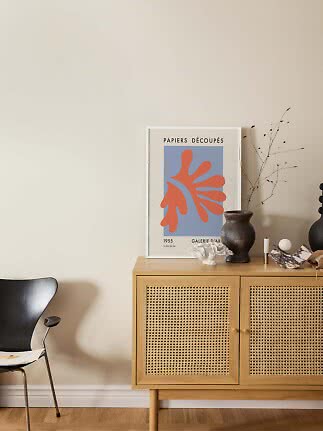
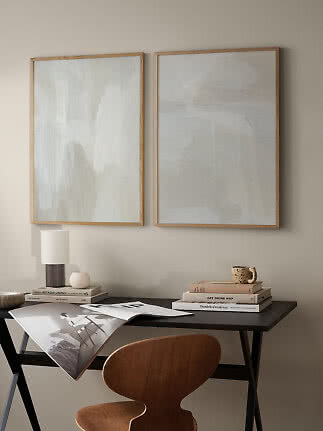
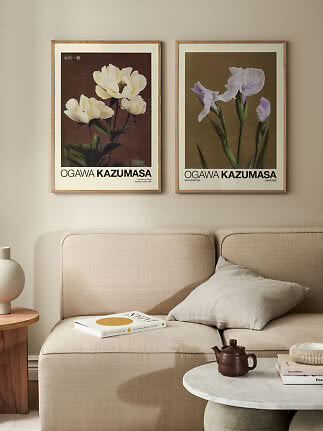
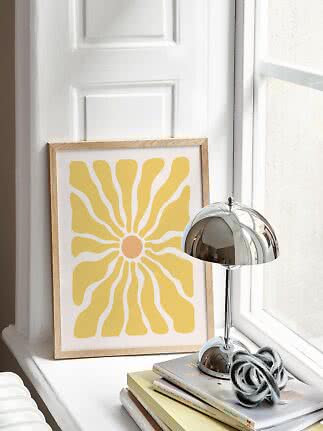
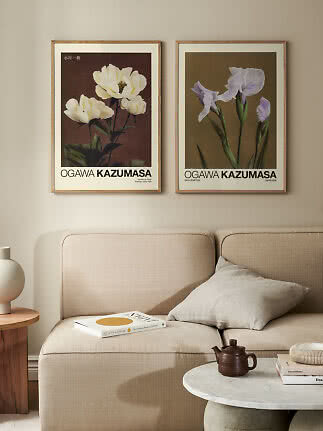
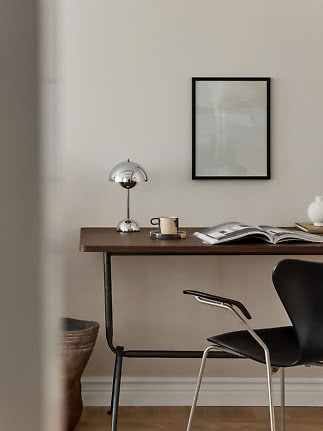
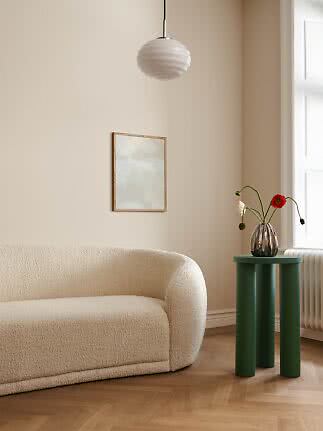
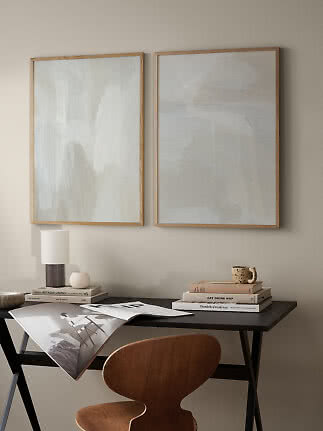
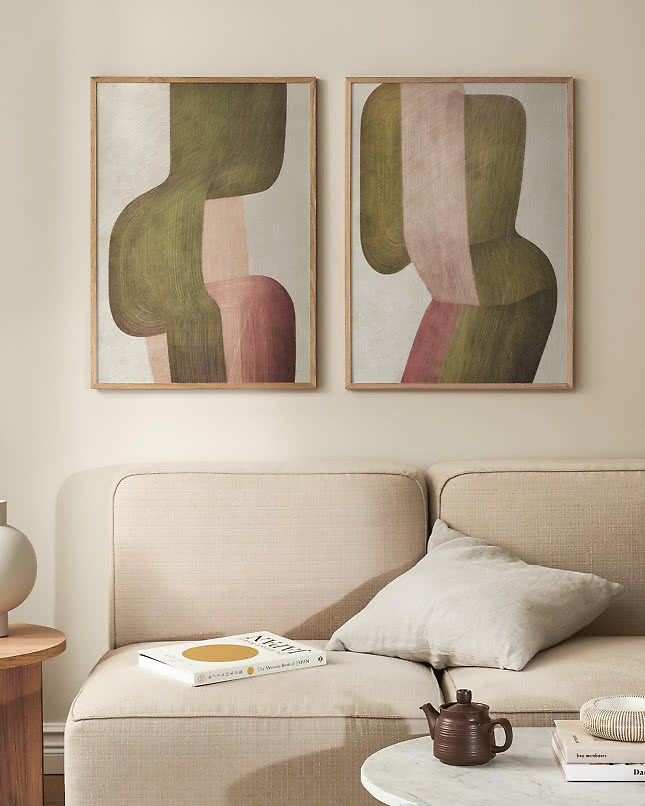
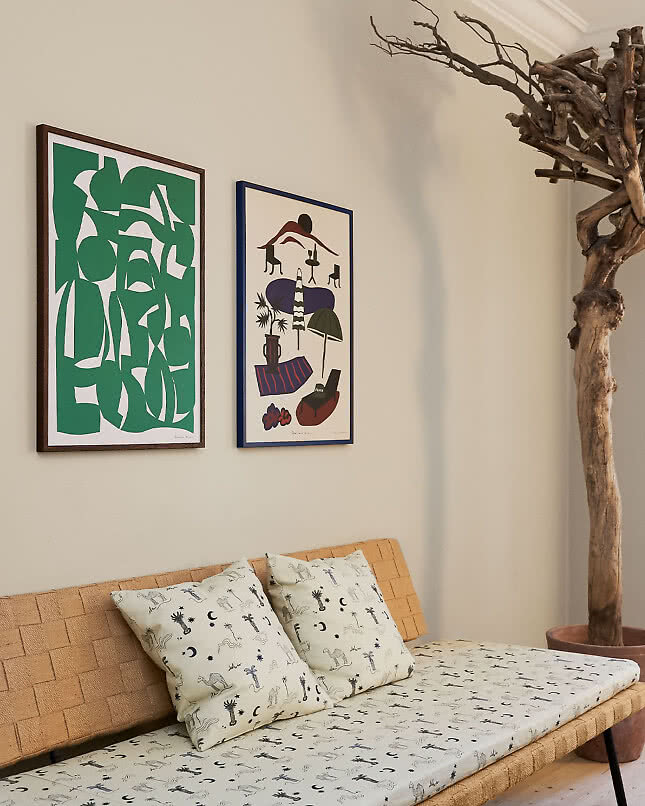
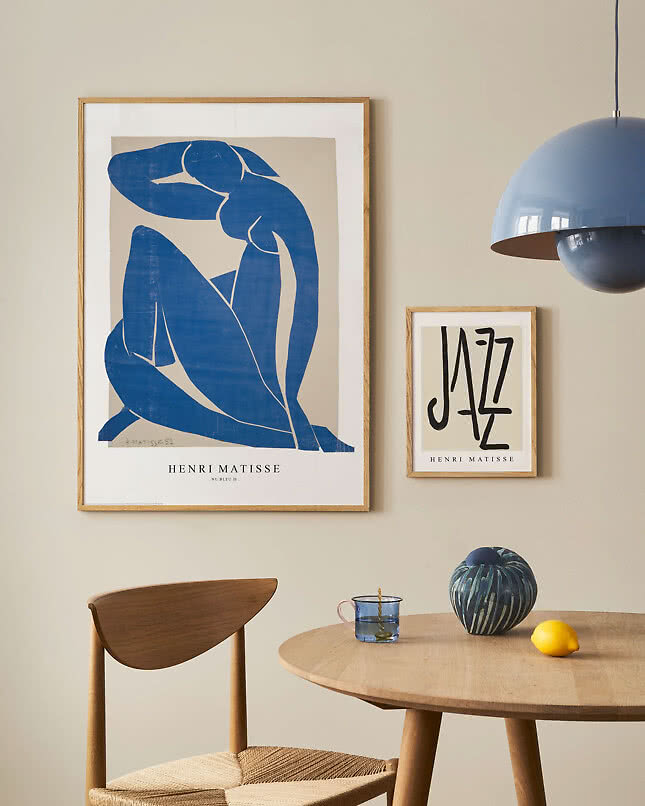
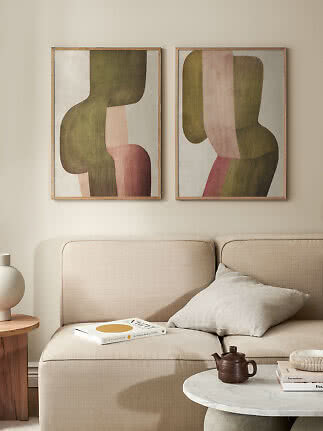
Two prints in the same size, side by side, with 2–3 in between them. It’s the easiest gallery wall there is, and it never looks unplanned. Choose two motifs that talk to each other – the same artist, the same colors or two parts of a series – and center the pair on the sofa, not on the wall.
About 42 in wide, two thirds of the sofa. 19.7x27.6 in is our most popular size, so there’s plenty to choose from.
About 57 in wide. Big enough to hold a large living room wall or the space above a wide bed.
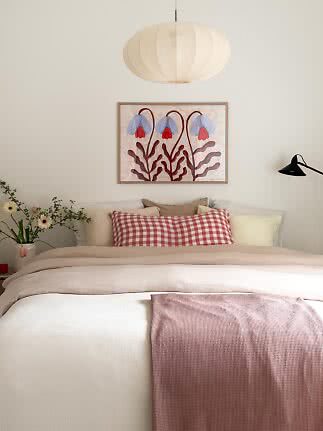
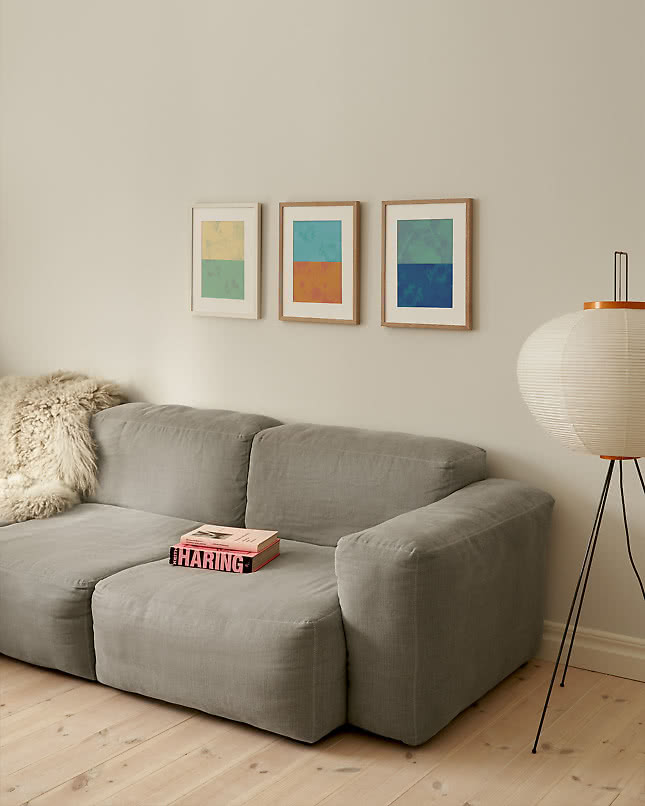
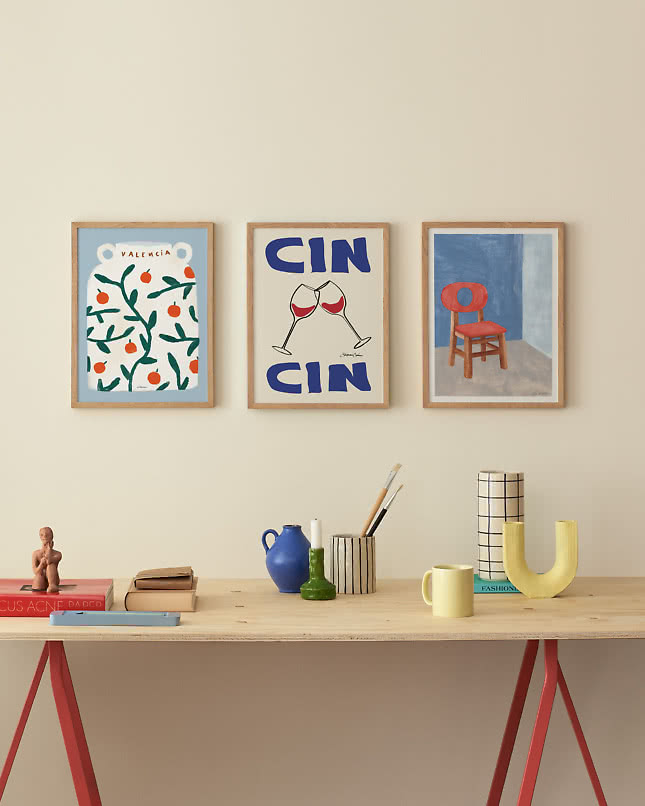
Three or more prints in the same size in a straight line, with exactly the same gap between every frame. A row loves long, low furniture: a sideboard, a bench or a wide sofa. Keep the frames level and the gaps identical – a row only works when it’s precise.
About 40 in wide. Calm and graphic, and easy to add to later.
About 51 in wide. Small formats in a long row read as one confident line.
Four, six or nine frames in the same size, in even rows and columns. The grid is the most ordered gallery wall and the easiest one to get perfect: measure once, keep every gap the same, and the wall looks designed. It’s a good way to show a series, or a mix of motifs held together by one frame color.
About 26 in wide. A small grid for a sideboard, a desk or a dresser.
About 52 in wide and 42 in tall. A grid this size fills a living room wall on its own.
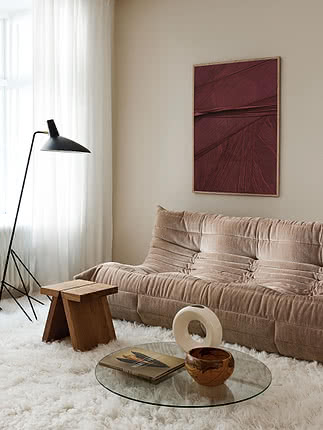
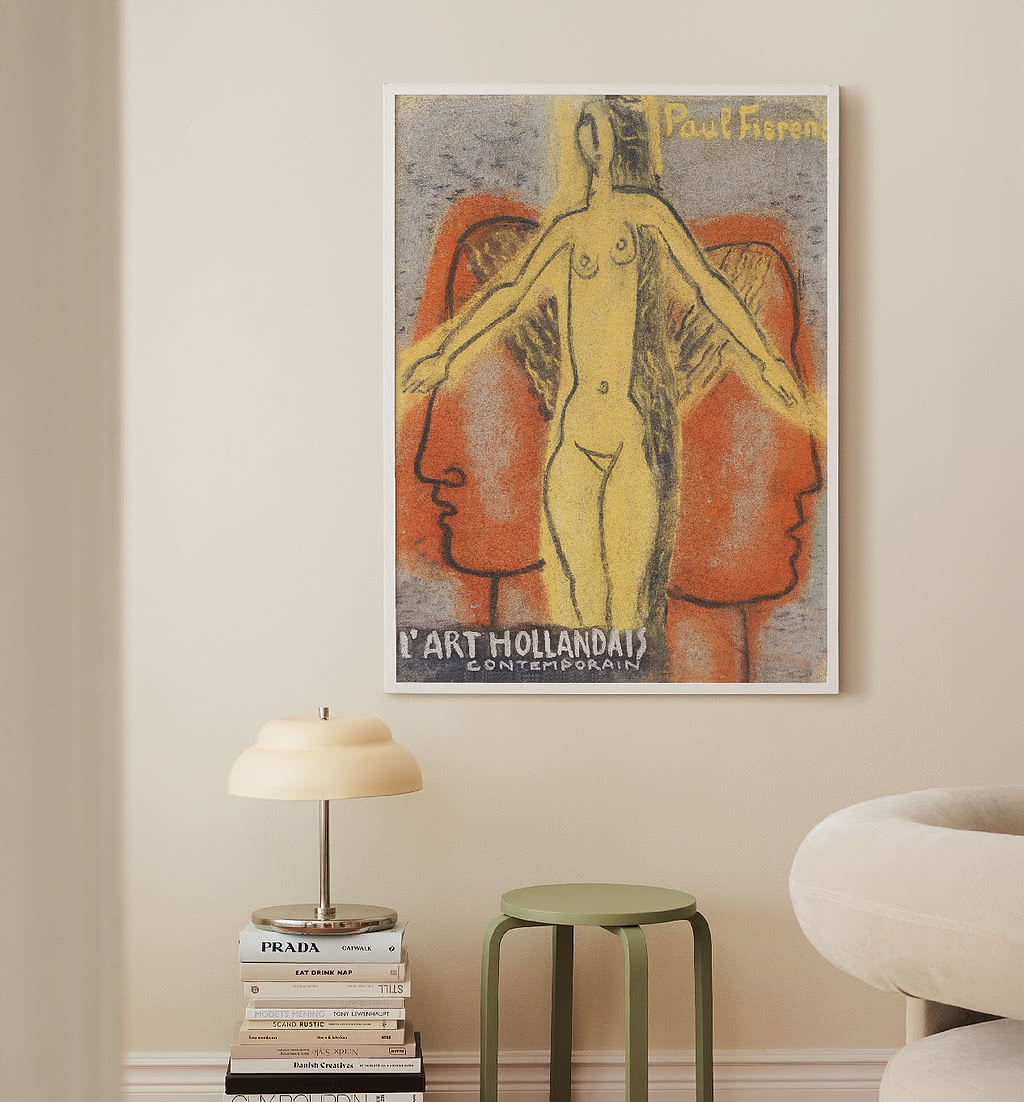
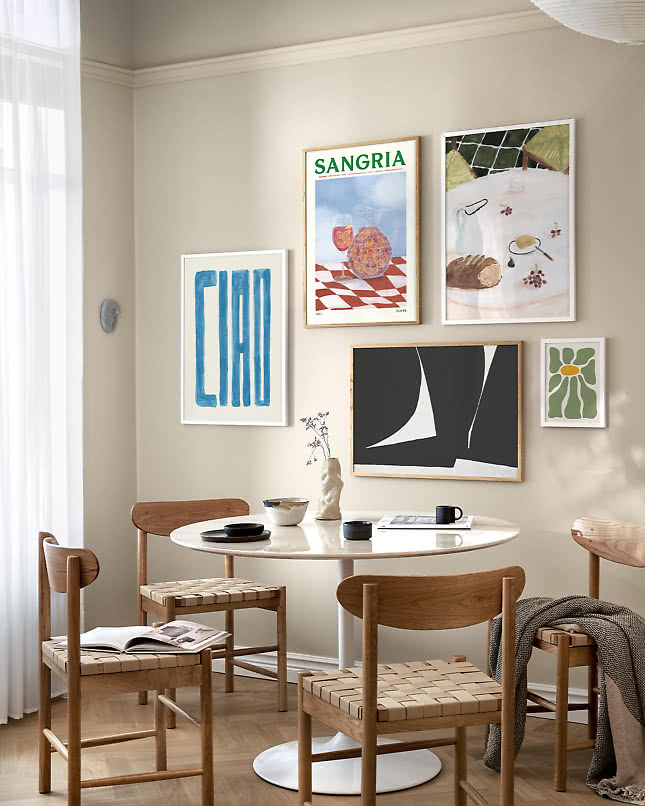
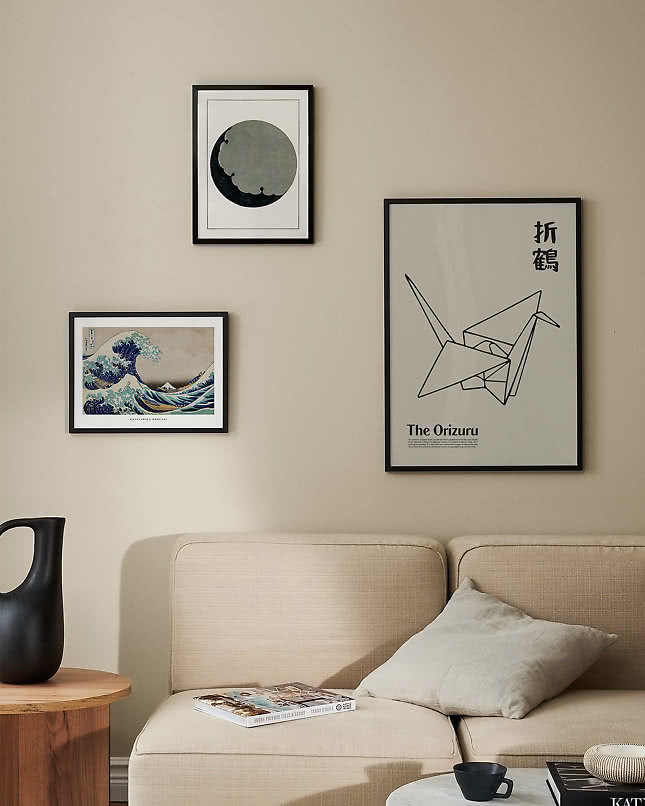
One large print with one or two smaller ones beside it. The large print is the anchor and sets the mood; the small ones add rhythm. Line the small frames up with the top or bottom edge of the large one, or stack two of them so they match its height – and keep the same gaps as everywhere else.
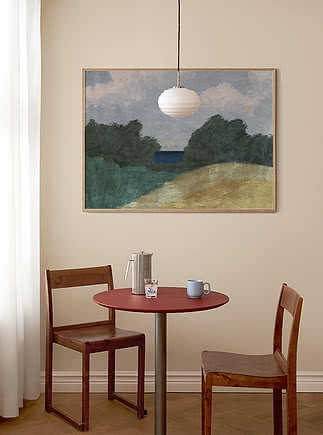
About 42 in wide, with the bottom edges lined up. Works just as well above a dining table.
About 30 in wide. Two stacked 8.3x11.8 in are almost exactly as tall as one 19.7x27.6 in, so the group reads as one shape.
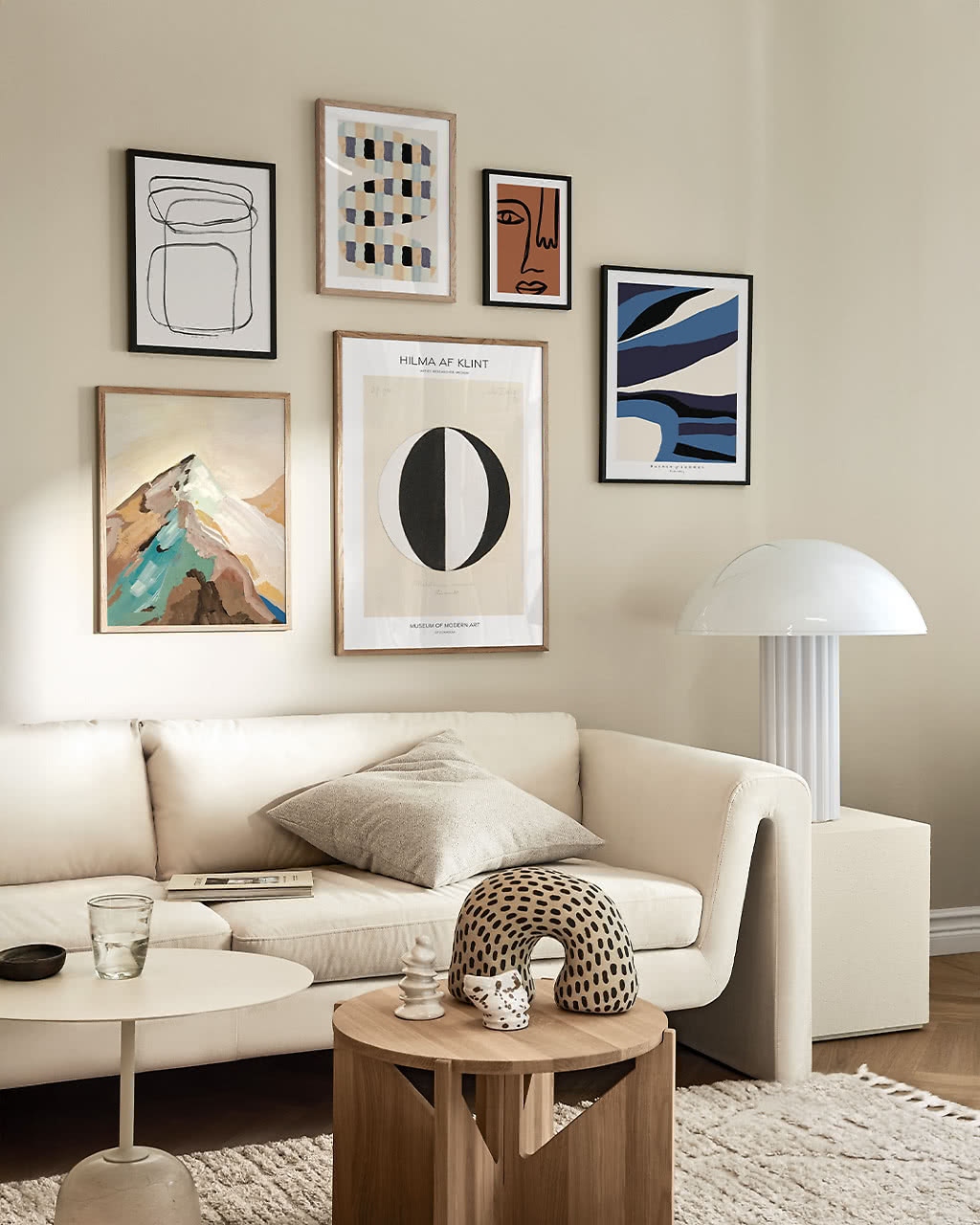
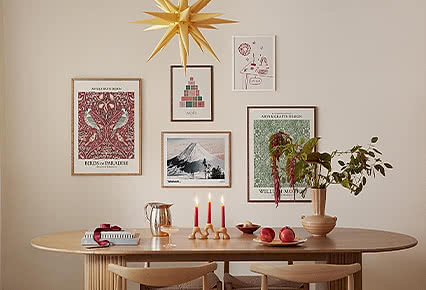
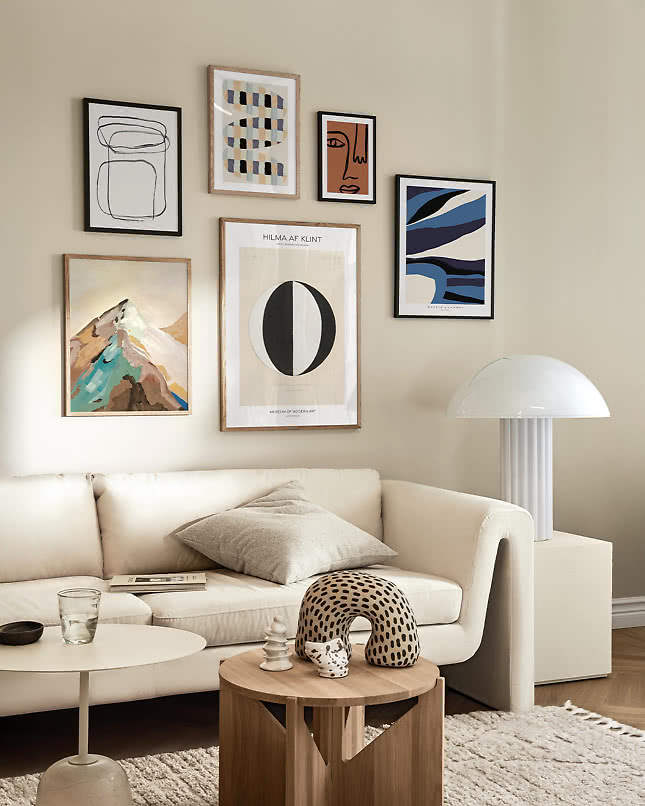
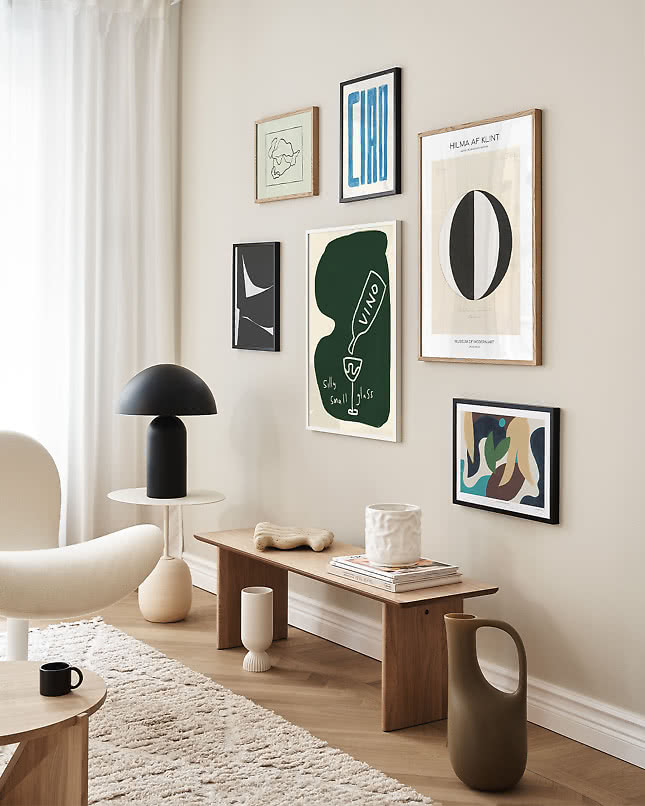
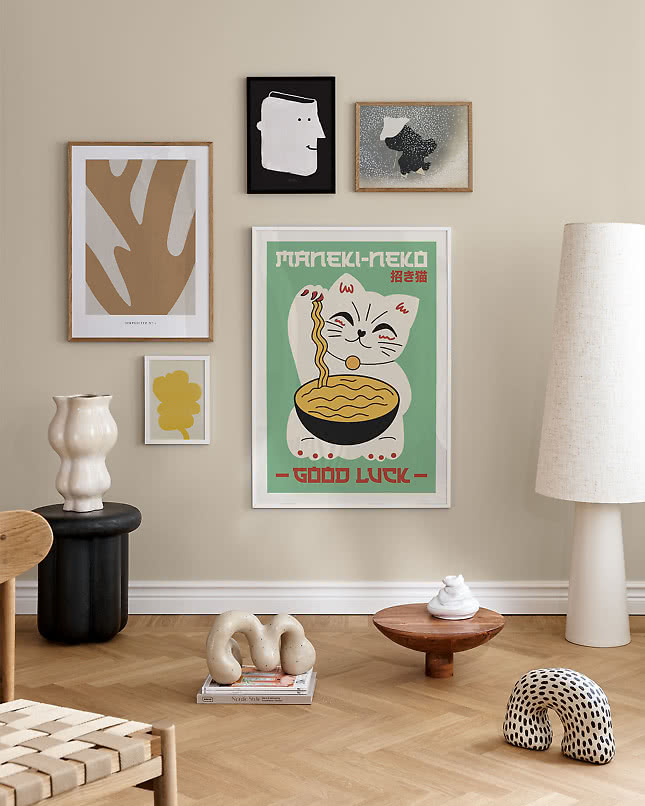
Five, six or more frames in different sizes and orientations, the way walls looked in the old Paris salons. It looks spontaneous, but it isn’t. Start with the largest print a little off-center, build outwards, and keep the outer edges of the group roughly inside an imaginary rectangle. Mix portrait and landscape, but keep the gaps the same.
About 55 in wide: one 19.7x27.6 in as the anchor, three 11.8x15.7 in (one turned to landscape) and two 8.3x11.8 in.
About 44 in wide: one 15.7x19.7 in at the center, two 11.8x15.7 in and two 8.3x11.8 in.
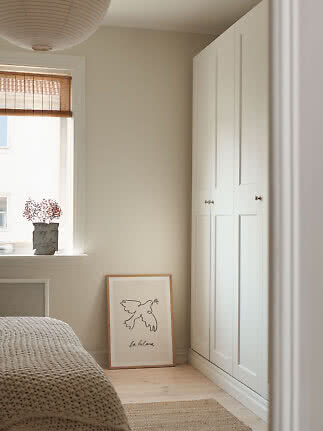
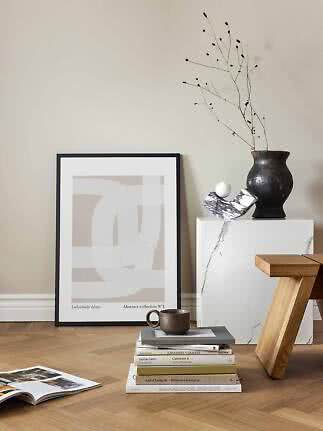
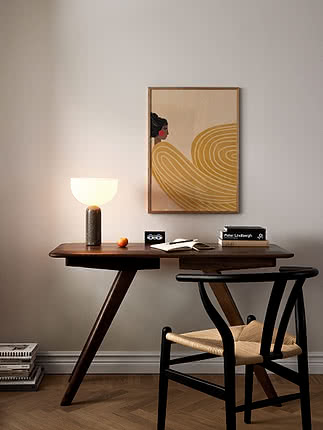
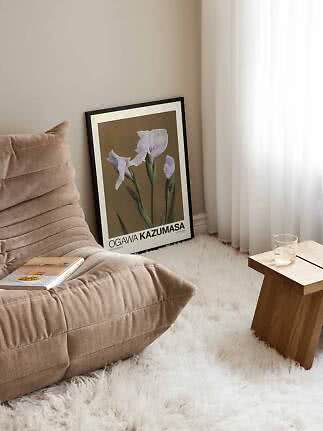
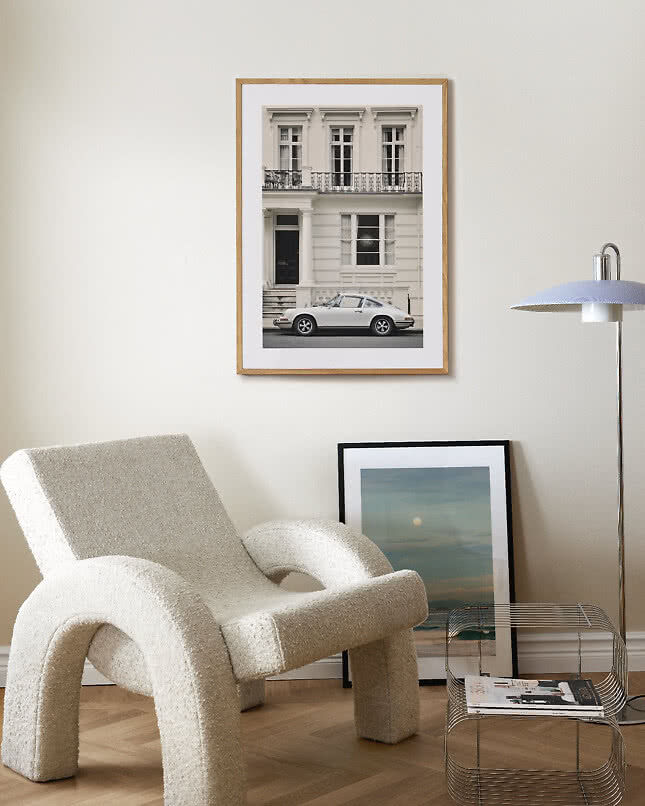
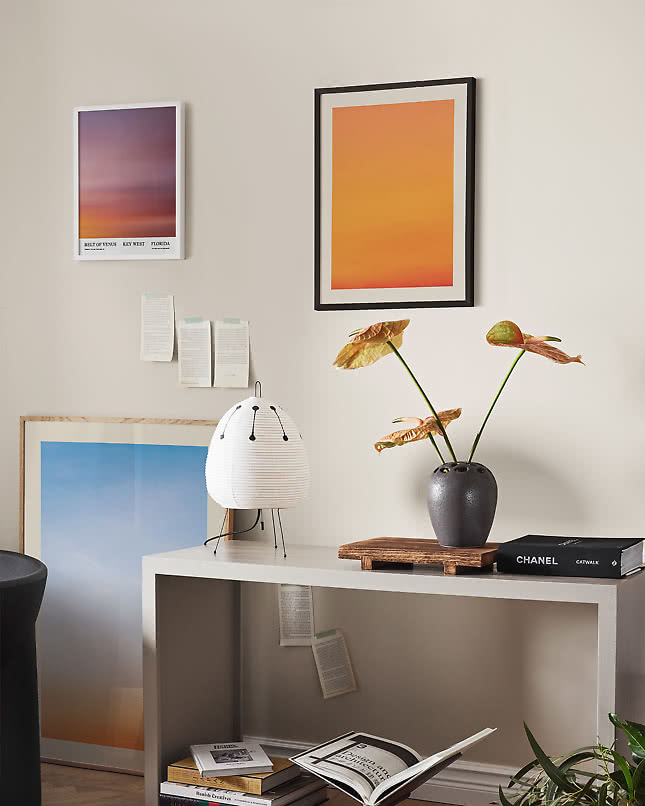
Not ready to drill? Lean the largest print on a sideboard, a shelf or the floor, and hang one or two smaller ones above or beside it. The layers make the wall feel relaxed and collected over time, and you can swap the motifs in a minute.
Start with the anchor. Pick the print you love most – often the largest – and let the others play supporting roles.
Repeat two or three colors. The motifs can be completely different as long as a few colors come back across the wall. Our gallery wall guide by Studio In goes deeper into color.
Mix the kinds of motifs. Abstracts, photography, botanicals and typography sit well together, and the mix is what makes the wall feel personal.
Turn a frame or two. A landscape frame among the portraits gives the wall movement.
The frames do as much for a gallery wall as the posters. A white mat board around a small print makes it look bigger and more finished, and helps a mix of sizes feel calm – read everything about mat boards. Three ways to do the frames:
| Look | Good to know | |
|---|---|---|
| One frame color | Calm and gallery-like | Black or oak work with almost any motif |
| Two frame colors | Relaxed but tidy | For example oak with two or three black frames spread across the wall |
| Mixed frames | Collected over time | Keep the motifs in one palette so the wall still holds together |
Lay the frames out on the floor until you like the composition. Trace each one on paper, mark where the hook goes, and tape the papers to the wall. Live with it for a day, then put the nails straight through the marks and pull the paper off.
Anything from two to ten works. Two or three is the easiest place to start. For a full wall above a 79 in sofa, five to seven frames in mixed sizes, or six in a grid, fill about two thirds of the width.
2–3 in between all the frames. The exact number matters less than keeping it the same everywhere – uneven gaps are what make a gallery wall look messy.
Treat the group as one picture and hang the middle of it about 57–59 in from the floor. Above a sofa, leave 8–12 in between the back of the sofa and the lowest frame.
They don’t have to be. One color is the calmest choice, two colors feel relaxed but tidy, and mixed frames work when the posters share a few colors.
8.3x11.8 in, 11.8x15.7 in and 19.7x27.6 in are the classic trio, with 15.7x19.7 in and 27.6x39.4 in as the next step up. Use one large size as the anchor and fill in with smaller ones.
Yes. A few landscape frames among the portraits make a salon wall feel lively. Keep the gaps the same and the outer edges of the group roughly straight.
Bestsellers to start your wall
New
New
New
New
New
New
New
More from the magazine
All articles →