 (1).png)
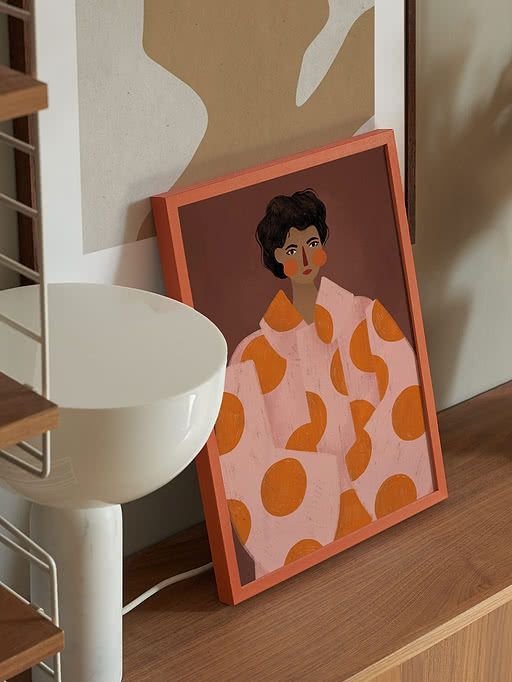
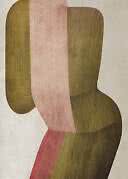

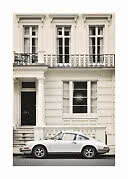

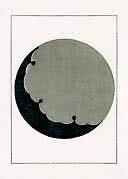


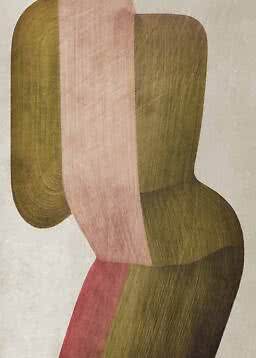
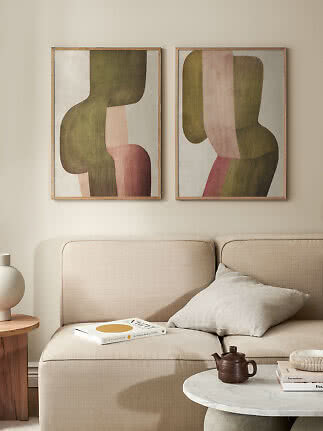
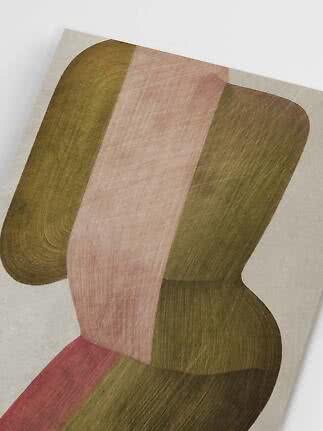
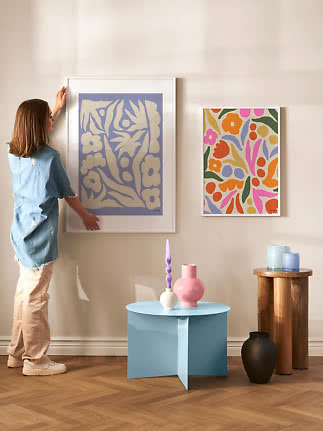
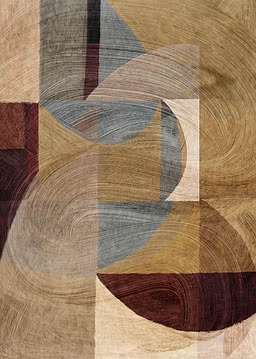
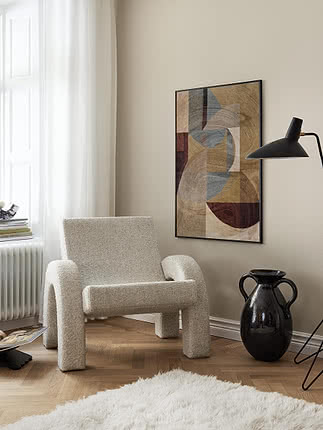
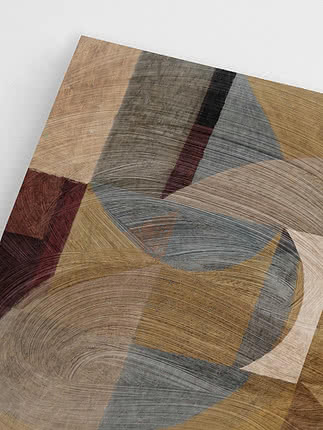
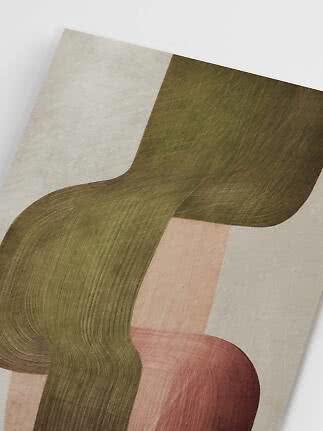
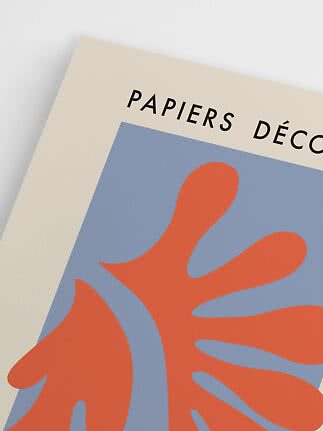
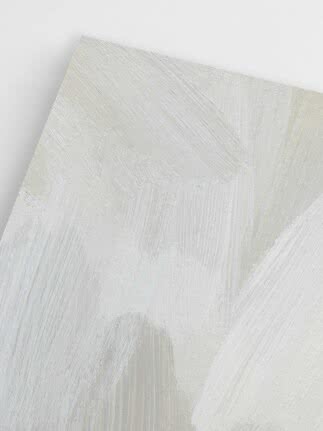
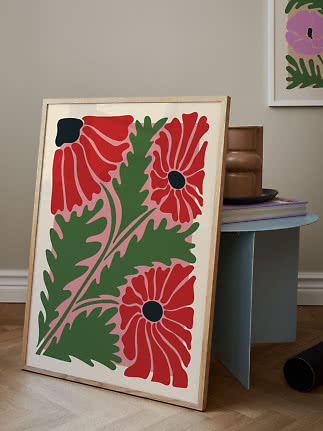
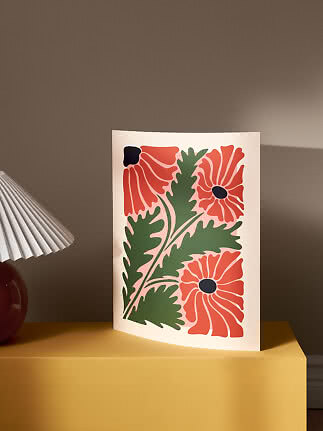
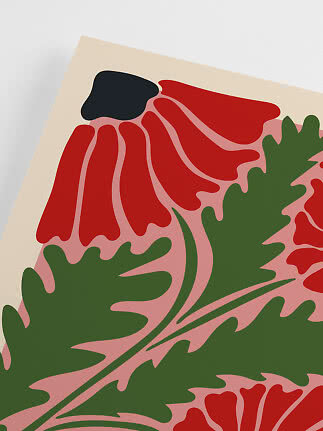
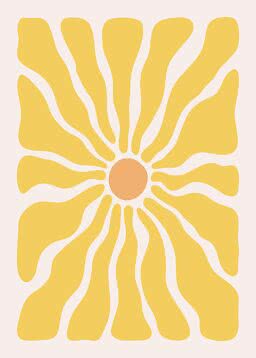
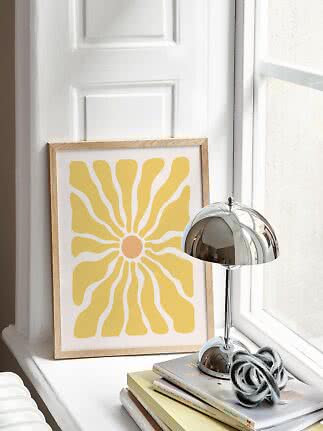
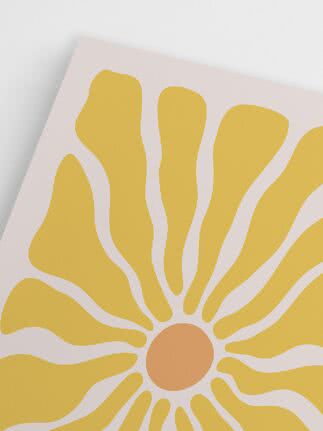
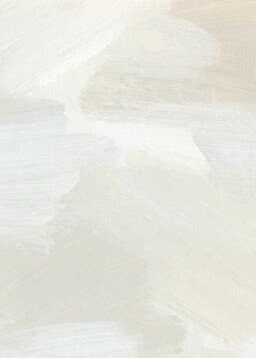
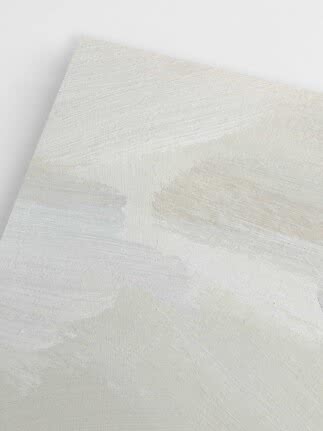
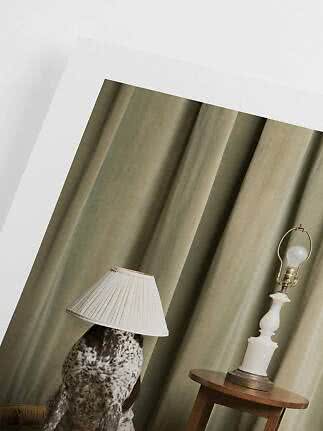
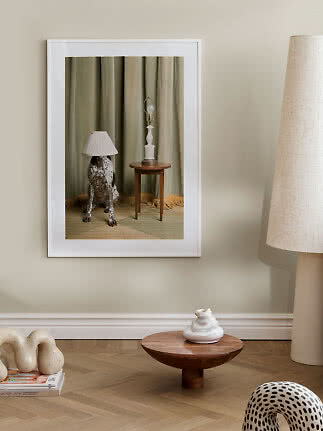
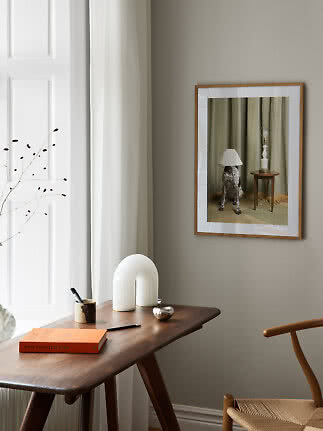
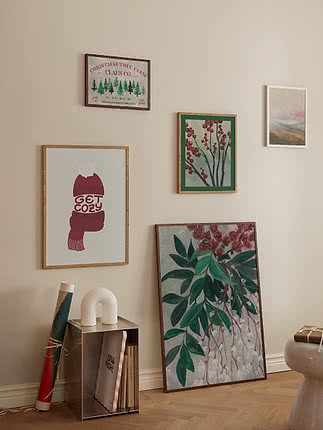
Muted Organic Flow I
Alma
$24.99$36.99
The living room is where art gets looked at the most – from the sofa, from the doorway, over a long dinner. It also has more walls to solve than any other room: the big one above the sofa, the sideboard and the TV, the corner by the armchair. Here’s how to make each of them work, which sizes fit, and how to choose motifs that suit the room you already have.
In short
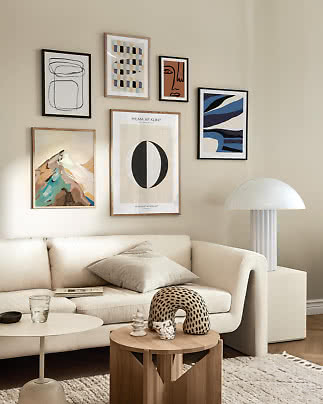
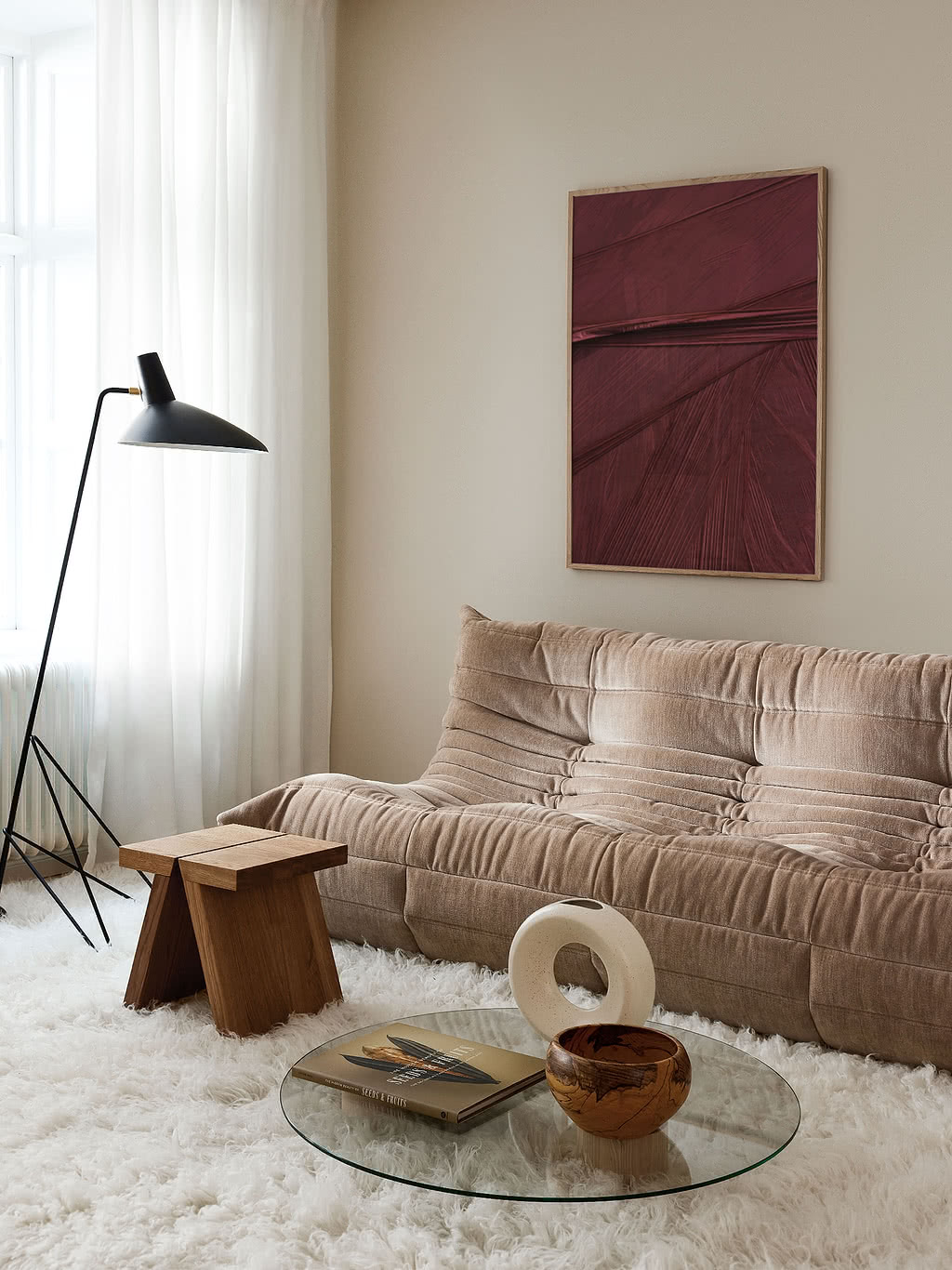
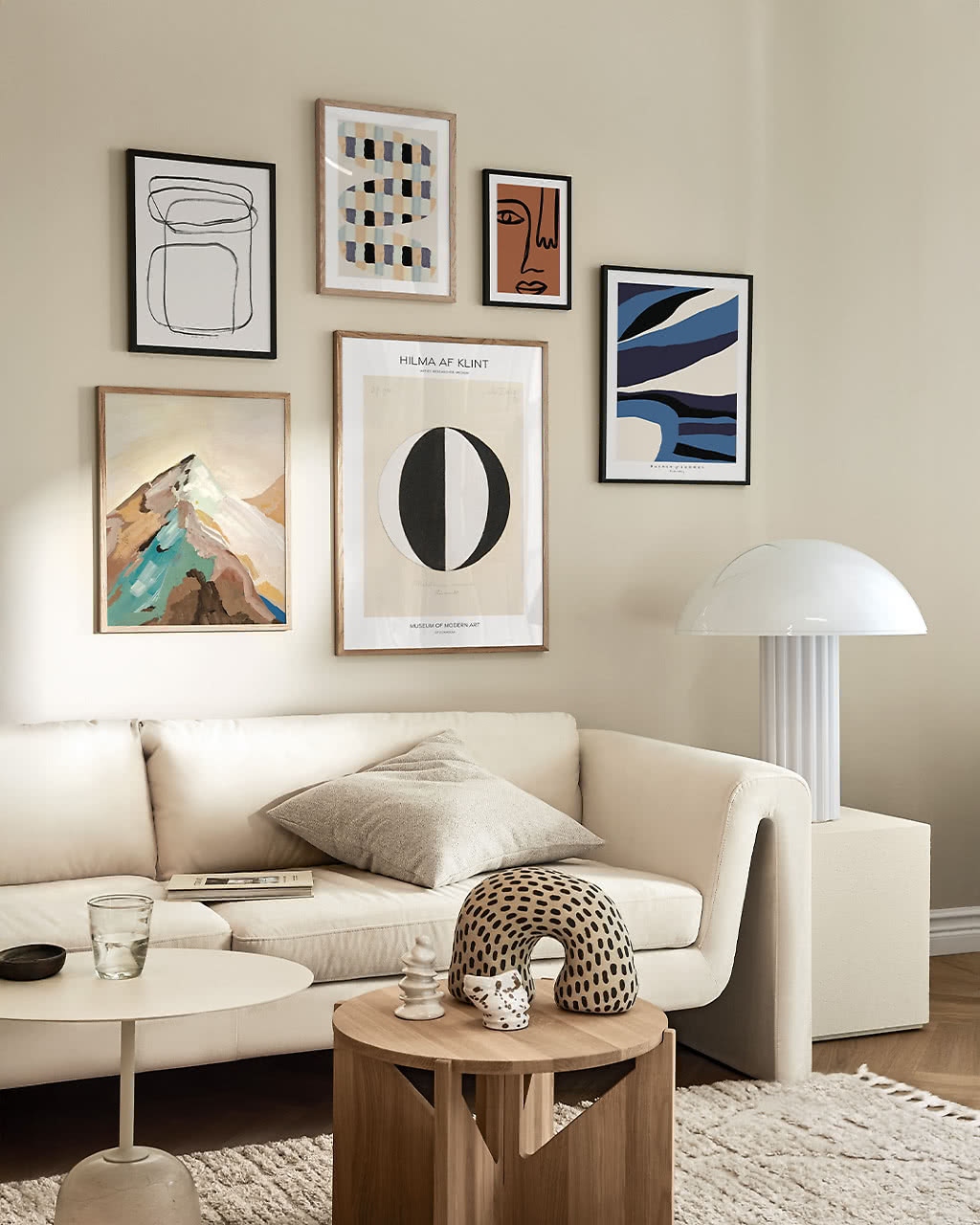
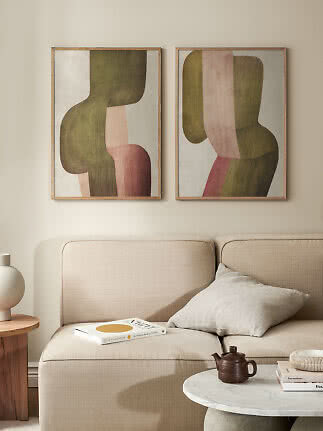
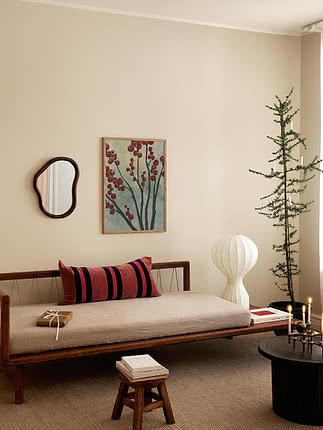
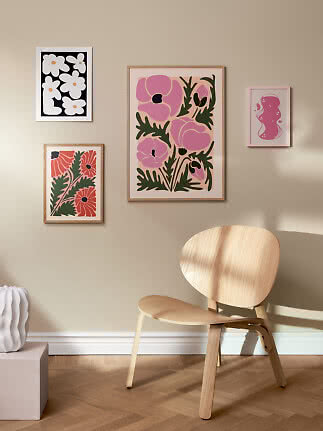
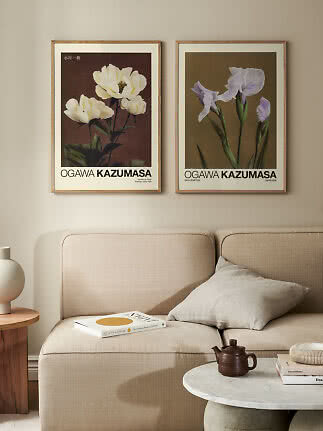
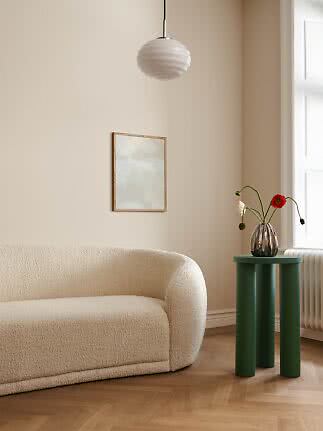
The wall above the sofa is the one everyone sees, so start there. Aim for art that covers about two thirds of the sofa’s width and hang it 8–12 in above the back, so the sofa and the art read as one. Center it on the sofa, not on the wall. Above a 79 in sofa, that gives you four good options:
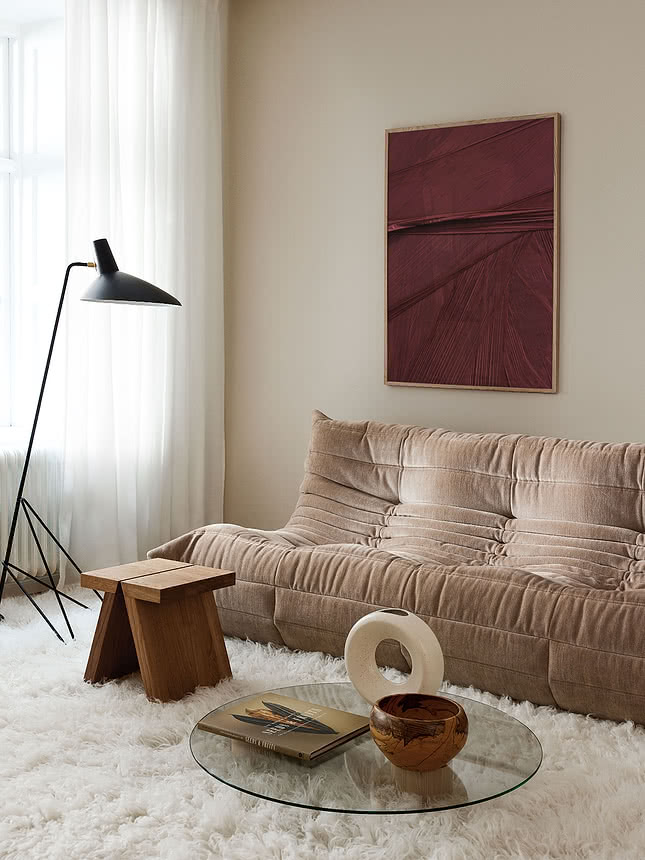
One 39.4x55.1 in, portrait or landscape. Landscape covers about two thirds of the sofa; portrait trades width for height – the boldest choice.
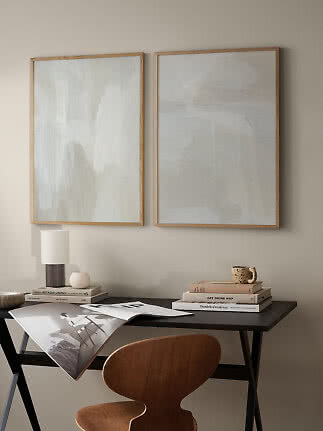
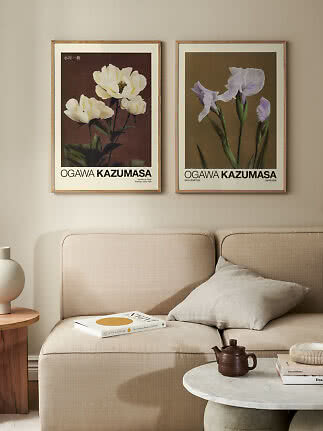
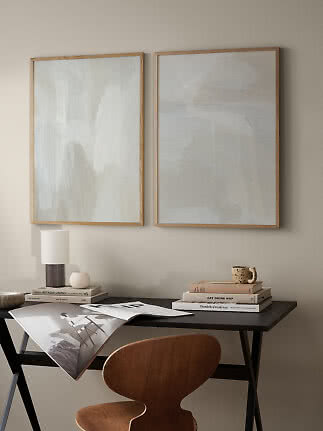
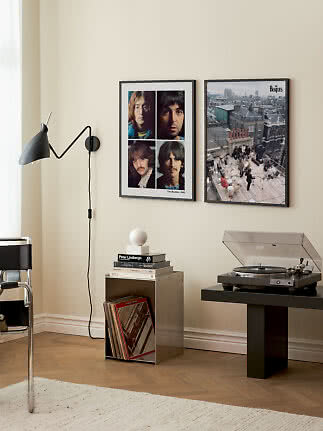
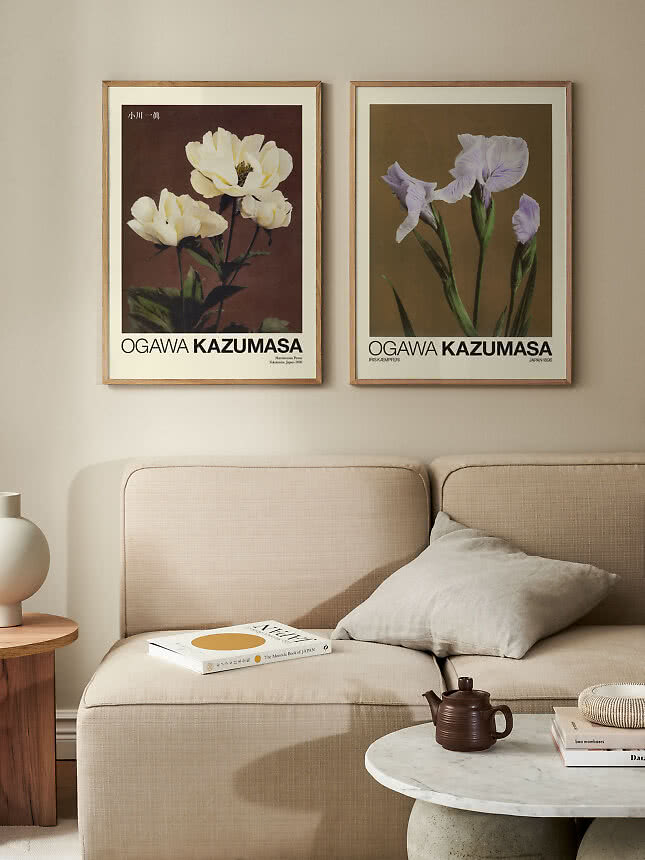
Two 27.6x39.4 in, about 57 in wide. The safest way to fill a big sofa wall.
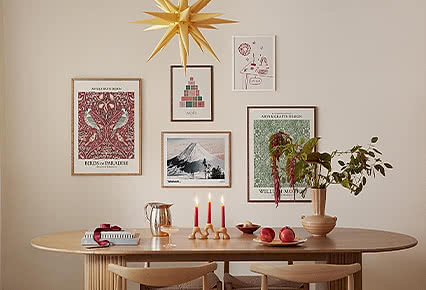
Three 15.7x19.7 in, about 52 in wide. Graphic, calm and easy to hang straight.
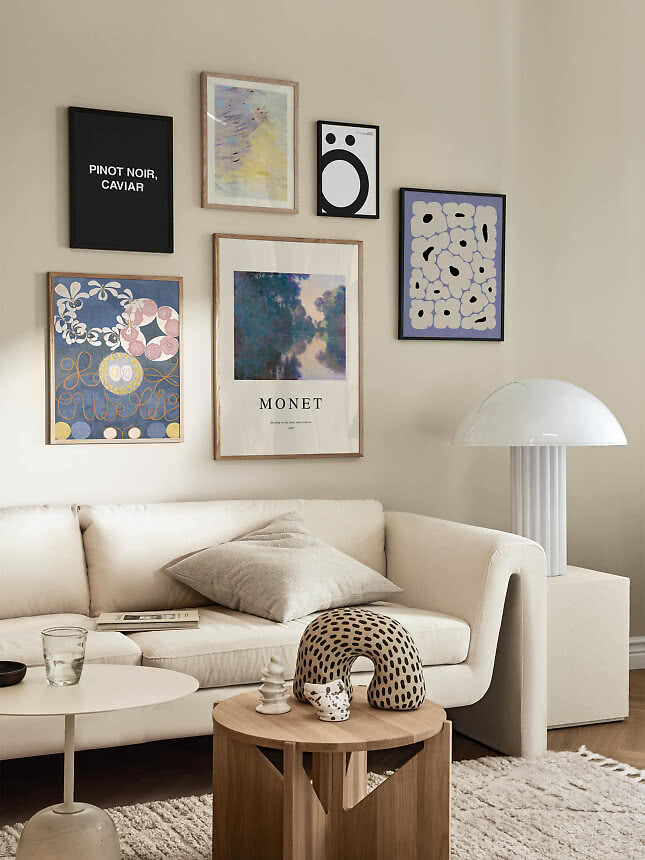
Six frames around one 19.7x27.6 in, about 55 in wide. Personal, and it can grow over time.
For one big print, see the motifs in our XL guide. For more ways to combine several, see our gallery wall ideas, five layouts drawn to scale.
Size calculator
Choose the furniture, enter its width and see what fits – with the size, the gap and the height to hang it.
39.4x55.1 in · landscape
One large print that sets the tone – the wall does the talking. Covers about 70% of the sofa’s width.
Shop 39.4x55.1 postersFive gallery wall layouts →Based on our hanging guide: 8–10 in above the furniture, about 2.5 in between frames and the top edge no higher than 83 in. Standard furniture heights and an 8 ft ceiling.
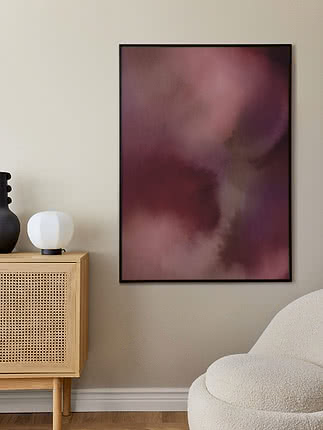
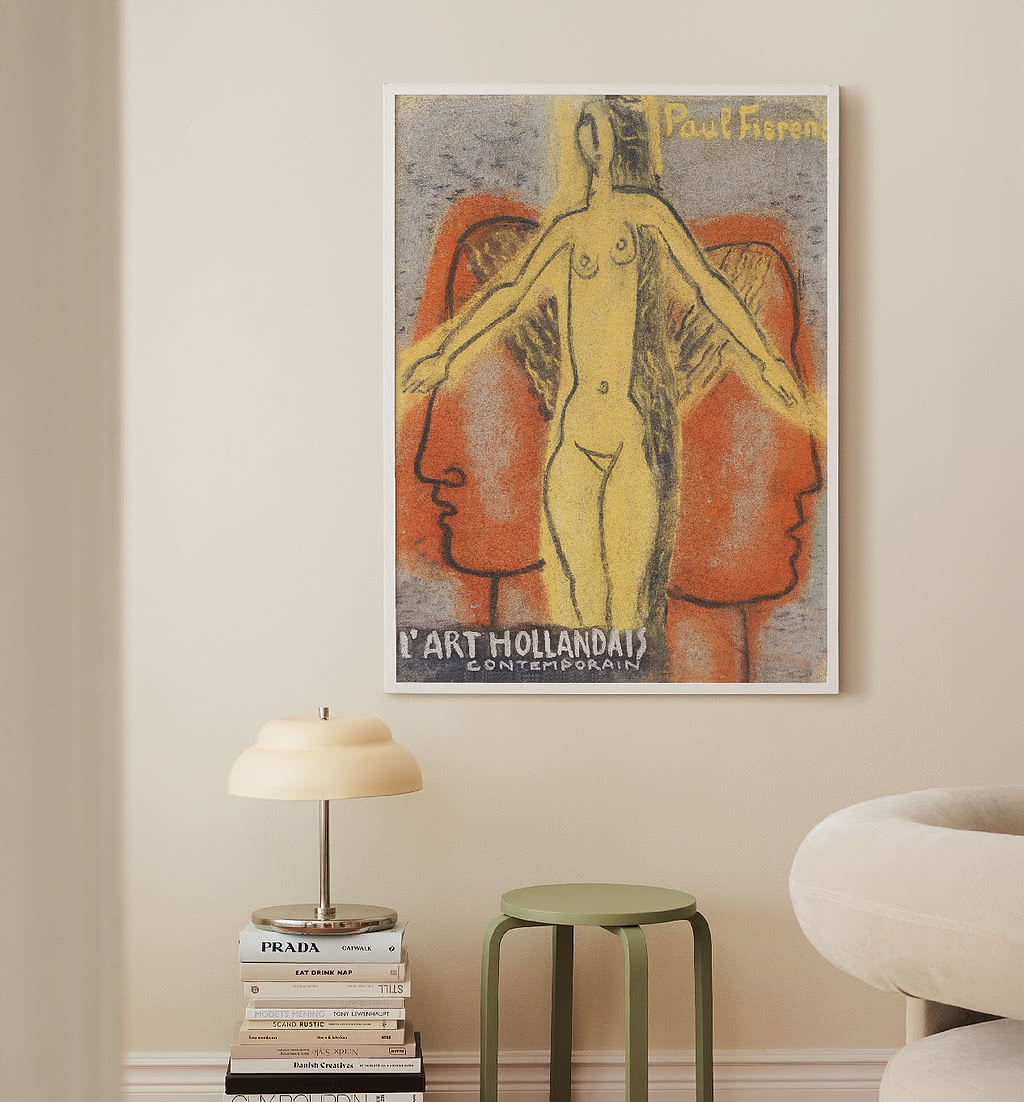
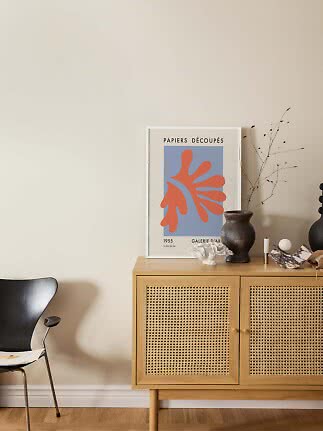
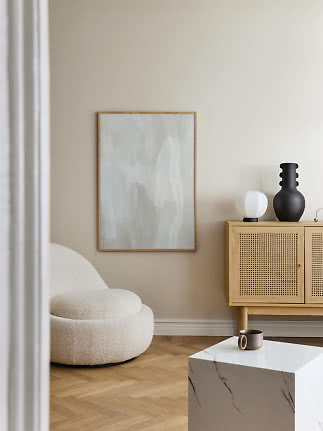
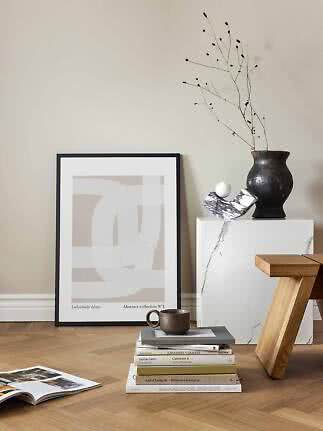
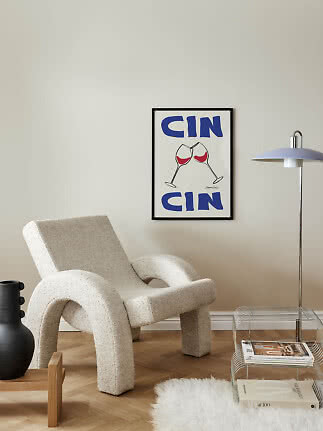
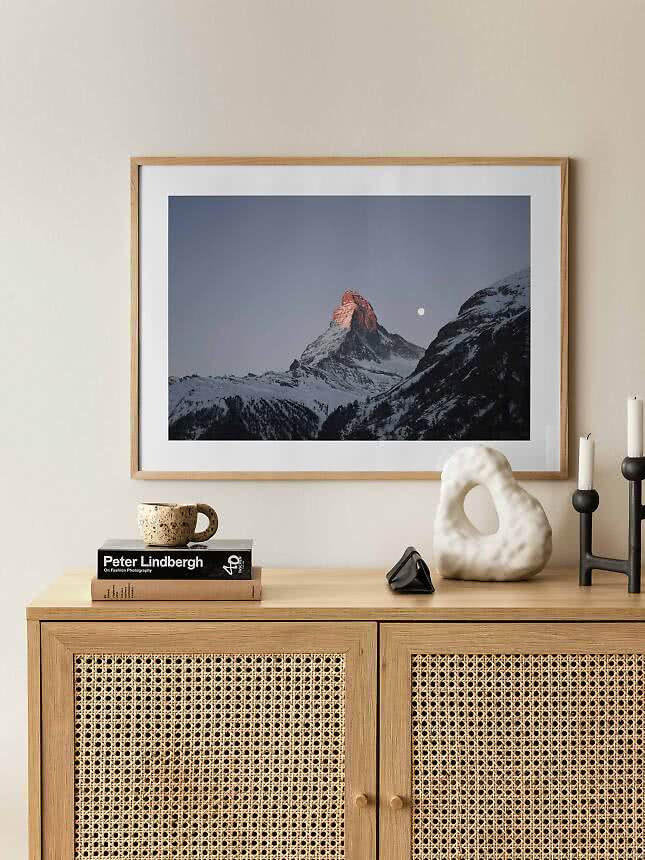
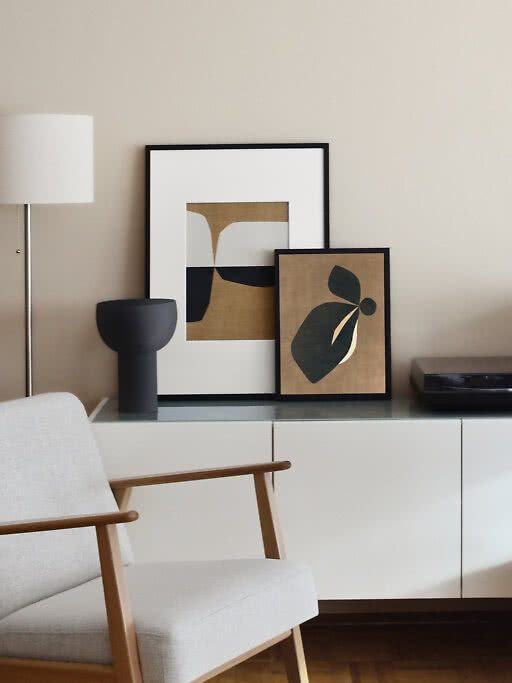
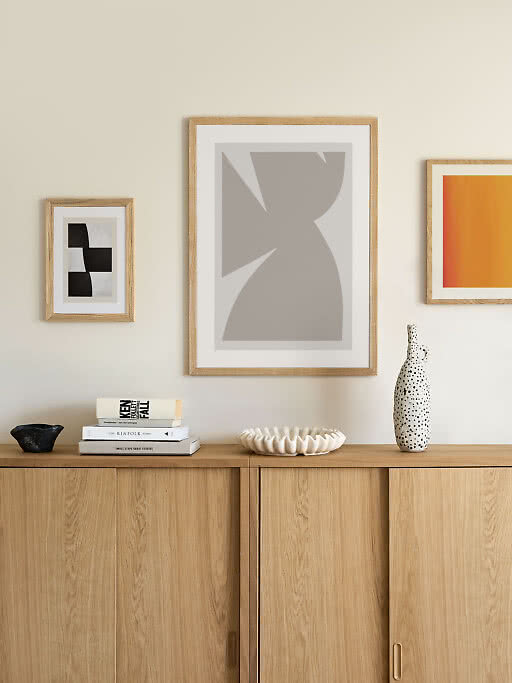
A sideboard is the easiest place in the living room to style. A landscape print about two thirds of the sideboard’s width, hung 6–10 in above it, always looks right. Or lean one or two frames on top for a relaxed, layered look that’s easy to change.
Got a TV? Don’t squeeze art directly above it. Hang it beside the TV, level with the screen, or build a small gallery wall around it in black frames, so the dark screen becomes one of the pictures when it’s off.
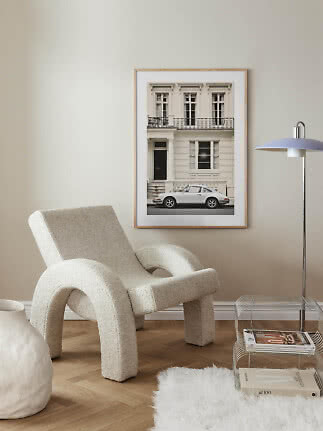
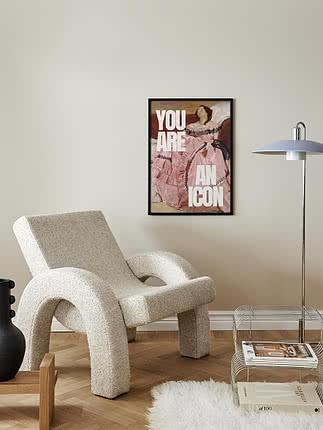
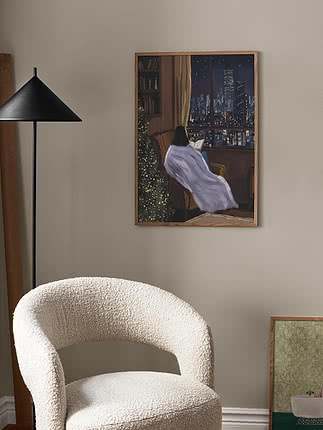
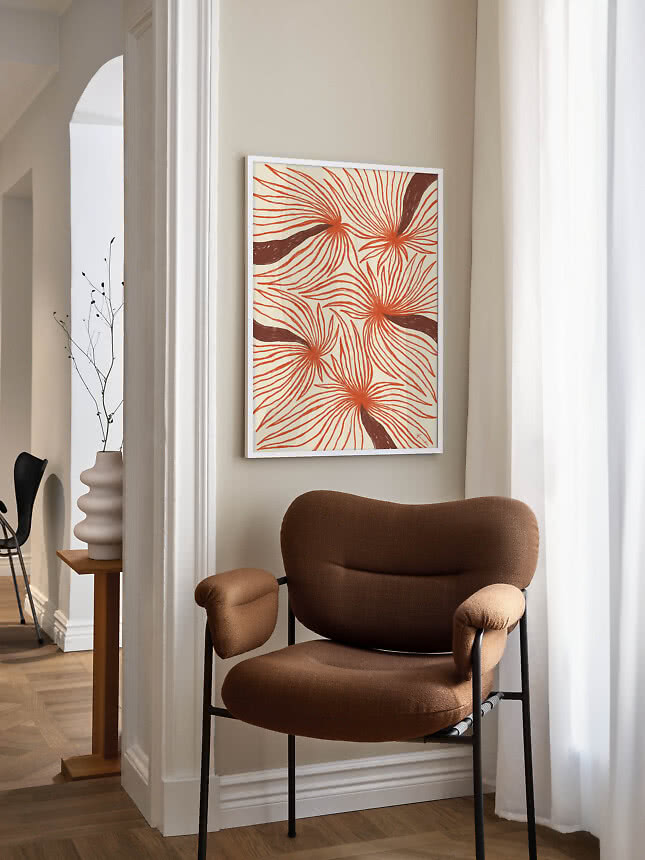
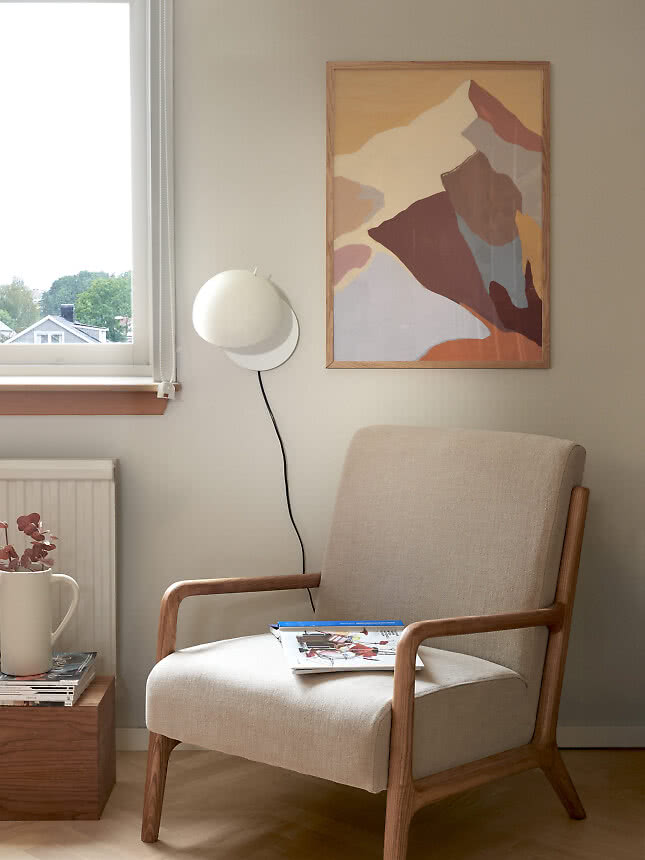
The smaller walls are where a living room gets its personality. Above a reading chair, go for one portrait print in 19.7x27.6 in or two 11.8x15.7 in stacked, and hang it a little lower than usual – you look at it sitting down. A narrow wall between two windows takes a tall, slim format, and the wall you see from the doorway deserves one of your favorites.
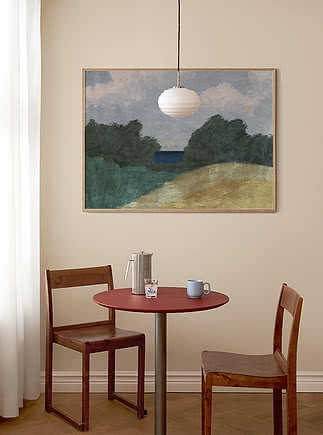
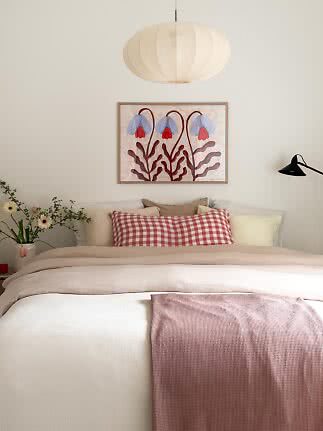
Start with what’s already there. Pick two or three colors from the sofa, the rug or the curtains and let them guide the motifs – colors that repeat are what make art look like it belongs. Then decide on the mood: calm and quiet, or a wall that adds energy. Four directions that suit most living rooms:
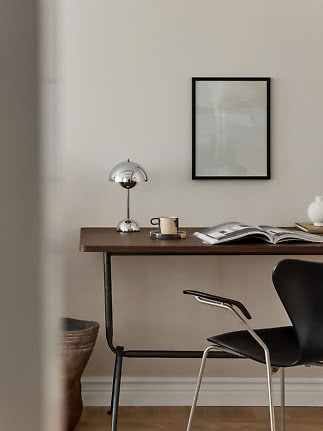
Soft abstracts, white on white and black-and-white photography that sit easily with linen, oak and wool.
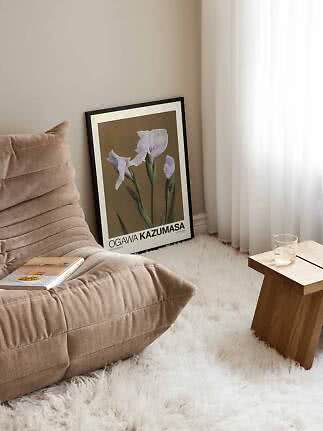
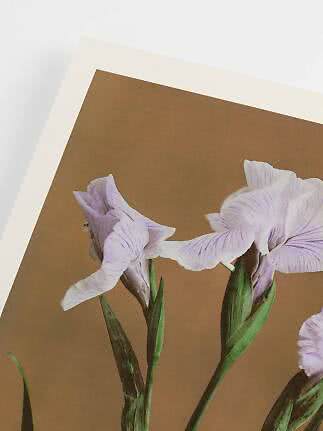
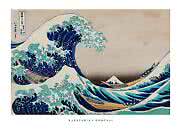
Japanese woodblock prints and quiet nature motifs for a calm room full of natural materials.
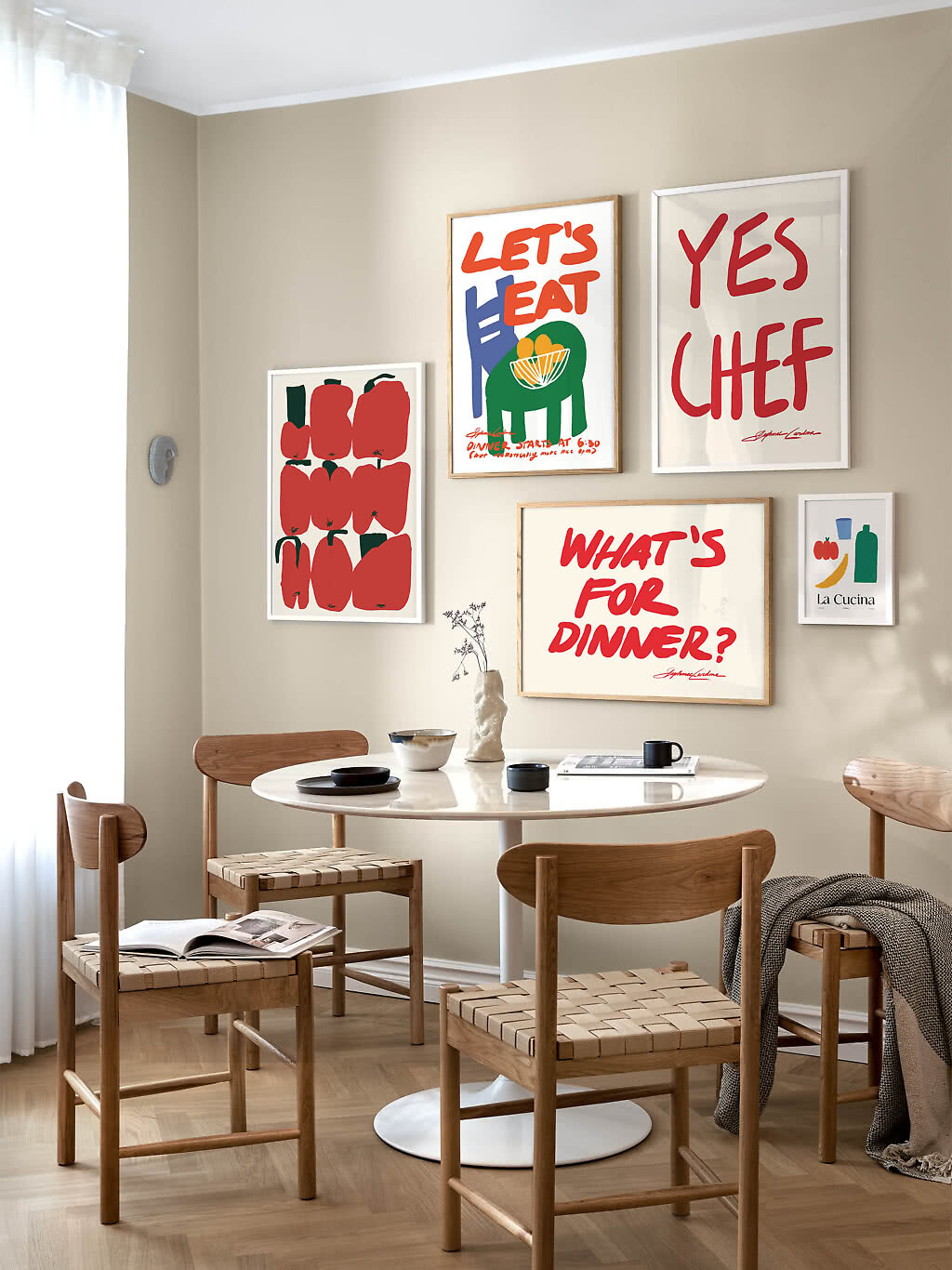
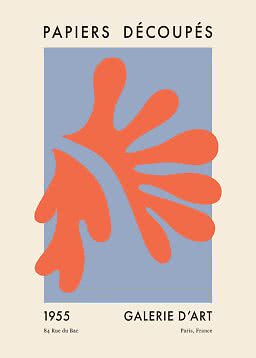
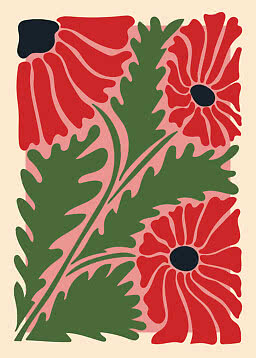
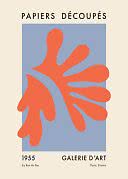
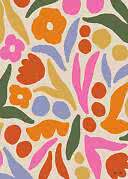
Cut-outs, florals and bold shapes that lift a neutral sofa and make a white wall feel warm.
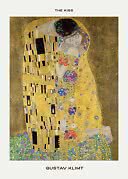
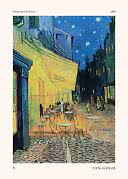
Matisse, Klimt and van Gogh – timeless in a modern room, and always a conversation starter.
Cut paper to the size you’re considering and tape it to the wall for a day. Seen from the sofa, it’s much easier to tell whether 19.7x27.6 in is enough or whether the wall wants 27.6x39.4 in. Our poster size guide has every size, and when you’re ready, browse all our living room posters.
About two thirds of the sofa’s width. Above a 79 in sofa that’s roughly 51–59 in of art: one 39.4x55.1 in, two 27.6x39.4 in, three 15.7x19.7 in or a gallery wall. Above a 63 in sofa, two 19.7x27.6 in or one 27.6x39.4 in.
Leave 8–12 in between the back of the sofa and the bottom of the frame. On an open wall, hang the middle of the art about 57–59 in from the floor.
On the sofa. The sofa and the art are seen as one group, so line up their centres – even if the sofa isn’t in the middle of the wall.
Hang art beside the TV rather than squeezed above it, or build a gallery wall around the screen in black frames so it blends in. Calm motifs work best next to a screen.
Pick two or three colors from your textiles and let them guide you. Abstract and botanical motifs are easy to live with, photography adds calm, and classic art gives the room character.
Living room bestsellers
New
New
New
New
New
New
New
New
New
New
New
More from the magazine
All articles →